
The Iron Distance: Mastering the Triathlon
Ironman Training • Endurance Fueling • Fat Oxidation
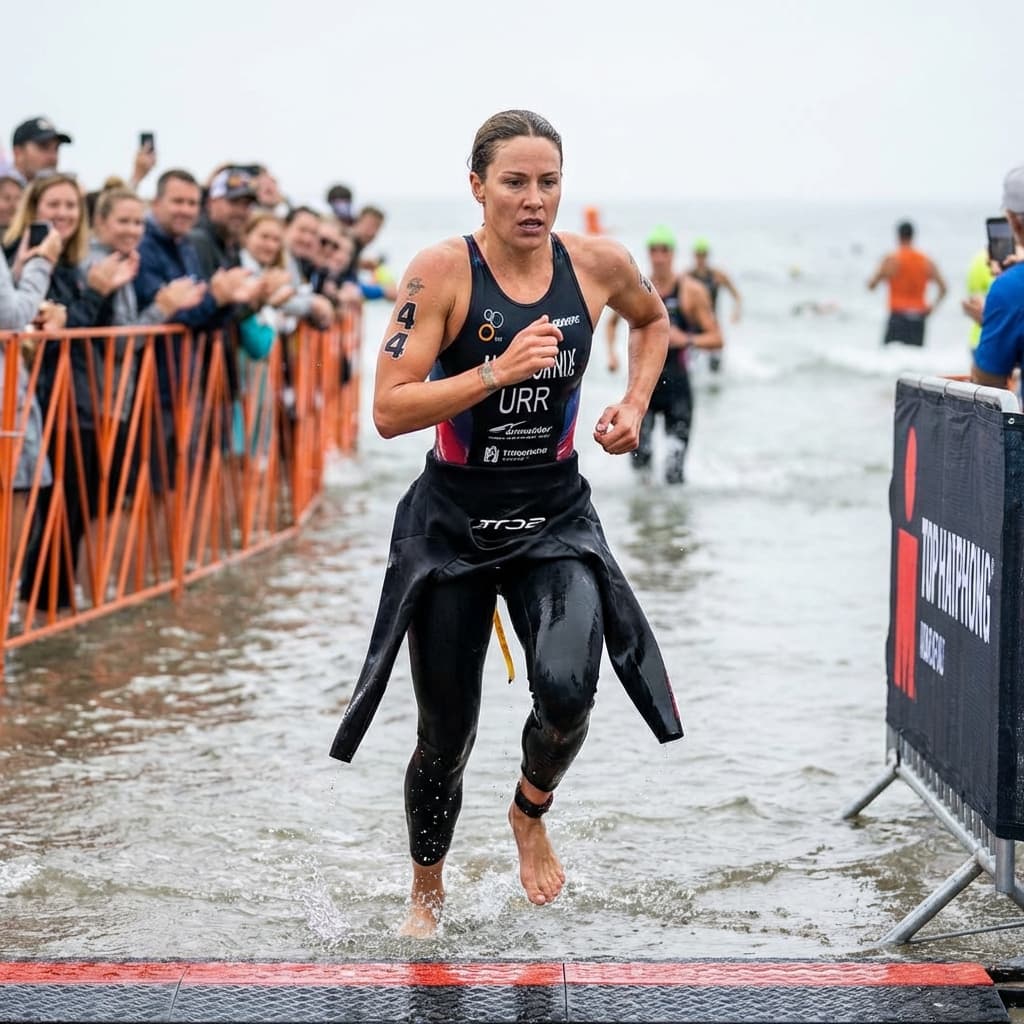
An Iron-Distance triathlon ($3.8$km swim, $180$km bike, $42.2$km run) is far more than an athletic endeavor; it is a profound assault on **Systemic Homeostasis**. Within the $140.6$-mile journey, the human machine must oxidize between $8,000$ and $11,000$ calories—a metabolic load that exceeds the total glycogen storage of the body by nearly $500\%$. Success in this arena is defined not by the fastest sprint, but by the most efficient management of energy substrates and neurological fatigue signals.
1. Lipid Metabolism vs. Glycogen Depletion: The Ultra Pivot
The primary limiting factor in ultra-endurance is the "Glycogen Ceiling." The human body can only store approximately $2,000$ kcal of glycogen in the muscles and liver. Given that an Ironman requires over $8,000$ kcal, the athlete must bridge a $6,000$ kcal deficit through **Lipid (Fat) Oxidation** and exogenous carbohydrate intake.
Elite IRONMAN athletes possess a significantly higher **FATMax**?the intensity at which they oxidize the maximum amount of fat per minute. By sparing glycogen for the final marathon, they prevent the "catastrophic failure" known as hitting the wall.
Bioenergetic Supply vs. Demand Matrix (Virtual Example)
Analyzing the calorie deficit and the sources of energy during the 140.6-mile race.
| Source | Total Capacity | Burn Rate (12hr Race) | Role in Success |
|---|---|---|---|
| Glycogen | ~ 2,000 kcal | Limited (Emergency) | The "Matches" to Burn |
| Fat Stores | ~ 80,000+ kcal | Primary (Aerobic) | The "Infinite" Engine |
| Exogenous (Gels/Food) | Max 90-120g/hr | ~ 360-480 kcal/hr | Gut-Limited Supply |
The matrix reveals that even with perfect nutrition (exogenous), you still rely heavily on fat oxidation. If your Zone 2 base is weak, you will inevitably deplete your glycogen before the marathon begins.
2. The "Central Governor" Theory: Neurological Fatigue
Fatigue is not a failure of the muscle; it is a regulatory signal from the brain. Per the **Central Governor Model (Noakes)**, your brain monitors blood glucose, core temperature, and oxygen saturation. If it senses that the current pace will lead to organ ischemia or heatstroke, it reduces motor unit recruitment. The "Wall" at mile 20 of the marathon is your brain protecting you from your own ambition.
3. Physiology of the "Iron-Gut": Managing Ischemic Stress
During high-intensity effort, up to $80\%$ of blood flow is shunted away from the stomach toward the working muscles. This results in **Exercise-Induced Gastrointestinal Syndrome**. To take in $90g$ of carbs per hour, you must engage in "Gut Training"?forcing the intestine to upregulated glucose ($SGLT1$) and fructose ($GLUT5$) transporters through specific training-nutrition protocols.
4. Electrolyte Fluid Dynamics: Preventing Hyponatremia
Ironman finishers often lose over $10$ liters of sweat. If this is replaced with pure water, the athlete risks **Exercise-Associated Hyponatremia (EAH)**?a dangerous dilution of blood sodium. Proper racing requires a sodium-to-water ratio that matches your specific sweat rate, often requiring $600$-$1,200$mg of sodium per hour.
Ultra-Endurance Hydration Benchmarks (Virtual Example)
Standardized fluid and electrolyte replacement targets for long-course racing.
| Metric | Light Sweater | Heavy Sweater | Clinical Impact |
|---|---|---|---|
| Fluid per Hour | 400 - 600 ml | 800 - 1,200 ml | Plasma Vol. Maintenance |
| Sodium per Liter | 400 mg | 1,500+ mg | Neural Signal Integrity |
| Glucose Ratio | 2:1 (Glu:Fru) | 1:0.8 (Advanced) | Absorption Saturation |
Heavy sweaters losing over $1,500$mg of sodium per liter face a massive challenge in replacement. Failing to hit these benchmarks results in the "Bonk" regardless of muscle strength.
5. Case Study: Kristian Blummenfelt's "Norwegian Method"
Analysis of how lactate precision and double-threshold training redefined Ironman speed.
Case Analysis: The Lactate Validation
The "Norwegian Method," utilized by Kristian Blummenfelt, relies on constant, real-time lactate monitoring to ensure the athlete never exceeds the **First Lactate Threshold ($LT1$)** during base building.
By keeping training *exactly* at the peak of aerobic efficiency, Blummenfelt developed a VO2 max of $90+$, the highest ever recorded in triathlon. This precision allowed him to maintain a pace during the 2021 Ironman World Championship that was previously thought only possible for half-iron distances. The takeaway is clear: Speed in an Ironman is the byproduct of a perfectly calibrated aerobic engine, not "grinding" high-intensity miles.
6. Periodization and the Taper: Supercompensation
The final $14$ days before a race are the most critical. This is the **Taper**. You cannot get fitter in these two weeks, but you can get "un-fatigued." Volume should drop by nearly $50\%$, but intensity must remain high to keep the blood plasma volume expanded and the nervous system sharp. This allows the liver and muscles to reach full glycogen saturation (Supercompensation) for race morning.
7. Common Pitfalls in Iron-Distance Race Management
- "Winning" the First 10 Miles: Starting the bike or run at a pace that feels "easy." If it feels "right" in mile 1 of a marathon, it is likely $15$-$20$ seconds per mile too fast.
- The GI Experiment: Trying a new nutrition brand offered at the race-course aid stations. Your gut transporters are specific; never eat what you haven't trained with.
- Ignoring Cardiac Drift: Maintaining the same power output as core temperature rises. As you get hotter, the same wattage requires a higher heart rate. You must adjust.
- Under-estimating the "Swim Tax": Thinking the swim doesn't matter. A poor swim-mechanic (high drag) burns massive glycogen before the "real" race even starts.
- The "Hero" Training Session: Doing a full Ironman distance in training. This creates so much systemic fatigue that the resulting recovery takes 4-6 weeks, destroying your actual race-peak.
8. FAQ
Why is Salt so important?
Sodium is the primary electrolyte responsible for "pulling" water into the bloodstream. Without it, the water you drink simply sits in your gut or causes swelling (edema), leading to dehydration despite high fluid intake.
Can I finish an Ironman on fat alone?
Biologically, yes, but at a very slow pace. To move at a "competitive" speed, your body needs the glucose-oxidation pathway to supplement the fat-oxidation engine. You are always a hybrid vehicle.
Does coffee help in an Ironman?
Caffeine can mask fatigue signals from the brain (Central Governor), but it can also cause GI distress. Most pros save caffeine for the final half of the marathon when the mental battle is at its peak.
*All HobbyTier content is based on general performance data and should not be taken as medical advice.
Always consult with a professional before starting new training protocols.
Document info
- Author: HobbyTier Editorial Team
- Updated: 2026-02-09
- Change summary:
- Comprehensive details on Ironman nutrition and pacing strategies.
- Provided multi-sport endurance adaptations and mental preparation models.