
How to Safely Increase Your Squat for the Next Tier
Squat Technique • Strength Progression • Safety Cues
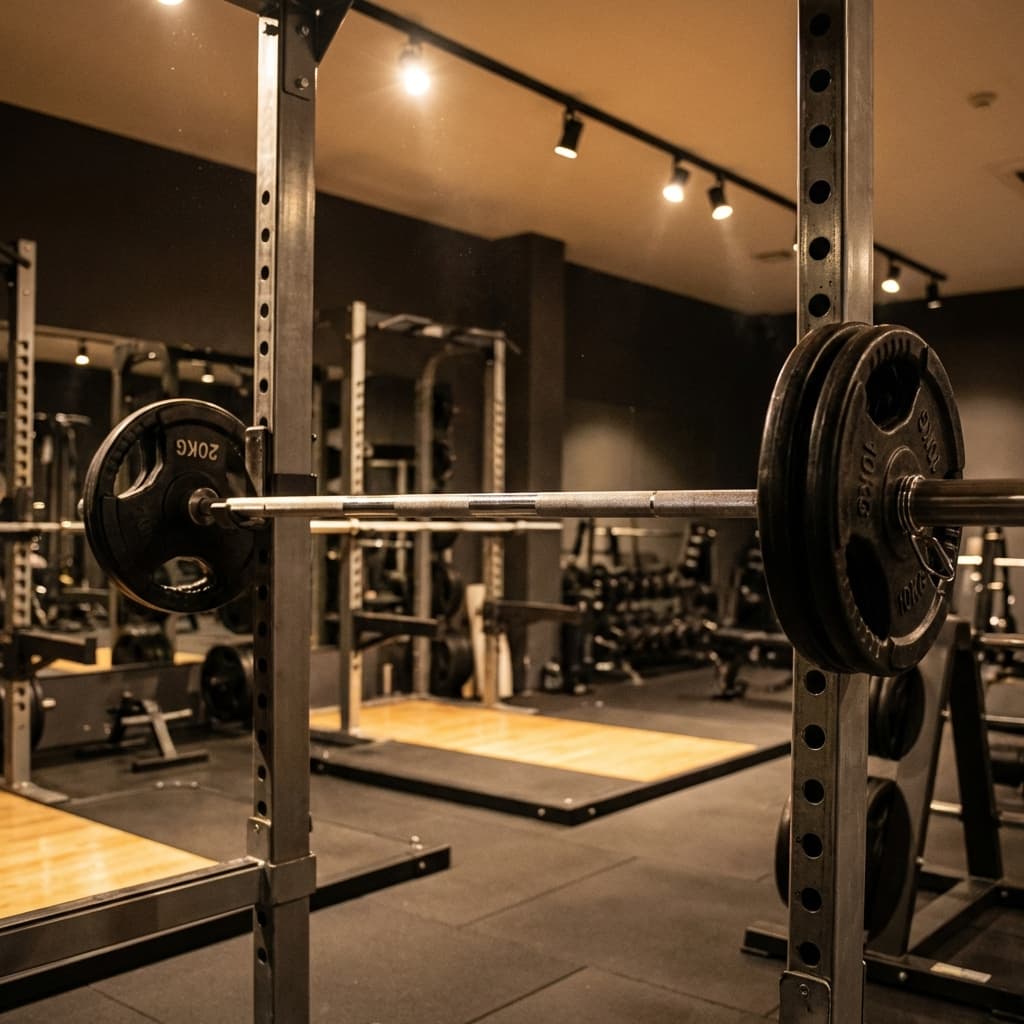
The squat is often heralded as the "King of Exercises," but from a skeletal perspective, it is a high-stakes engineering challenge. Lifting 2x or 3x bodyweight requires the human frame to manage massive shear and compressive forces. This article breaks down the mathematical and structural principles of squat progression, moving past "just push" and into "how to build a biological crane."
1. Geometrical Mechanics: Torque and Moment Arms
In biomechanics, **Torque** ($\tau$) is the product of Force ($F$) and the **Moment Arm** ($d$). In a squat, the moment arm is the perpendicular distance between the axis of rotation (joint) and the line of force (the barbell weight).
To squat heavy safely, you must minimize horizontal distance between the bar and your center of mass. If the bar drifts 5cm forward, the moment arm at the knee or lower spine increases exponentially, placing the structural integrity of the joint at risk. Mastery of the squat is the mastery of maintaining the bar path over the mid-foot.
Bar Placement & Lever Matrix (Virtual Example)
Analyzing how bar position alters the torque requirements of specific muscle groups.
| Placement Style | Moment Arm Focus | Primary Driver | Limit Factor |
|---|---|---|---|
| High-Bar (Olympic) | Longer Knee Lever | Quadriceps | Ankle Dorsiflexion |
| Low-Bar (Power) | Longer Hip Lever | Posterior Chain | Spinal Stability |
| Front Squat | Maximum Knee Lever | Upper Thoracic | Thoracic Extension |
The matrix highlights that "optimal" is subjective. If you have exceptional dorsiflexion, High-Bar might be safer. If you have shorter femurs, Low-Bar will allow you to move the most weight with the least systemic fatigue.
2. Intra-Abdominal Pressure: The Pressurized Pillar
The human spine is not designed to support 200kg through bone alone. Instead, it relies on **Intra-Abdominal Pressure (IAP)**.
By utilizing the **ValSalva Maneuver**?inhaling deeply into the diaphragm and bracing the abdominal wall against closed airways—you create a "biological pressurized vessel." This pressure creates a rigid core that offloads compressive forces from the intervertebral discs onto the abdominal cavity. Research shows that high IAP can reduce spinal compression by up to 40% during a maximal effort squat.
3. Wolff's Law: The Blueprint for Bone Adaptation
Muscles grow in weeks, but **connective tissue** takes months. **Wolff's Law** states that bone and tendon will adapt to the loads under which they are placed.
If you increase your squat too rapidly (e.g., adding 10kg/week), your muscle strength will outpace your tendon's structural integrity, leading to patellar tendonitis or stress fractures. A sustainable progression follows a "step-loading" approach, allowing for the slow remodeling of the collagen matrix within the tendons.
4. Example: Westside Barbell's Tendon Pre-habilitation
Understand how elite powerlifters manage extreme loads without breaking.
Case Study: Connectivity over Contractility
At Westside Barbell, lifters often reported knee pain as they approached the 300kg threshold. The solution wasn't "less squatting," but **Reverse Sled Drags** and **Tendon Loading**.
By performing high-volume, low-impact eccentric movements, they increased blood flow to the avascular patellar tendon. This triggered collagen synthesis without the shearing torque of a full squat. The result: lifters were able to peak for competition with zero tendon pain—the "engine" (muscles) was finally supported by a strong enough "chassis" (connective tissue).
5. Kinematic Integration: Knee Tracking and Femoral Torque
A common failure point is the "Knee Valgus" (knees caving in). This is often caused by a lack of **External Rotation Torque**.
To fix this, you must "root" your feet into the floor, imagine trying to "screw" your feet outward. This activates the glute medius and creates a stable hip capsule. Without this torque, the femur rotates internally, putting massive shear stress on the ACL and the medial meniscus.
Progression Safety Benchmarks (Virtual Example)
Metrics for determining when to increase load versus when to focus on structural reinforcement.
| Visual/Physical Metric | Green Light | Yellow Light | Red Light |
|---|---|---|---|
| Bar Path (Side View) | Vertical over Midfoot | Slight drift forward | Excessive pitch forward |
| Hips vs. Chest Rise | Simultaneous | Hips lead slightly | "Good Morning" Squat |
| Joint Sensation | Fatigue/Heat | "Achiness" post-lift | Sharp/Stabbing Pain |
Progression should only occur on a "Green Light" status across all metrics. If you show a "Red Light" in bar path, even if you completed the reps, the load should not be increased.
6. Common Pitfalls in Squat Progression and Form
- Chasing Numbers over Mechanics: Adding weight to the bar while shortening the range of motion (partial reps). This creates unstable joints and weak tendons.
- Inadequate Bracing: Relying on a belt to provide stability instead of learning to generate internal IAP. A belt should augment your brace, not replace it.
- Ignoring Ankle Mobility: Attempting to stay upright in a High-Bar squat with stiff ankles, leading to the weight shifting onto the toes and overloading the knees.
- Lack of Foot Arch Tension: Allowing the arches to collapse, which triggers the "Knee Valgus" cascade and weakens the entire kinetic chain.
- Linear Progression Burnout: Continuing to add 2.5kg every session after the "Novice" phase has ended. This leads to systemic CNS fatigue and high injury risk.
7. FAQ
Is it safe for the knees to go past the toes?
Yes, provided the bar path stays over the midfoot and you have the requisite mobility. The idea that knees past toes is "dangerous" is a debunked myth from the 1970s.
When should I start using a weightlifting belt—
Wait until you can squat 1.25x bodyweight with perfect form. Use the belt for your "Main" heavy sets (80%+ 1RM) to enhance your existing IAP brace.
How wide should my stance be?
This depends on your hip socket anatomy (acetabular depth). Generally, shoulder-width with a 15-30 degree toe flare is the starting point for most human geometry.
*All HobbyTier content is based on general performance data and should not be taken as medical advice.
Always consult with a professional before starting new training protocols.
Document info
- Author: HobbyTier Editorial Team
- Updated: 2026-02-09
- Change summary:
- Refined progressive overload strategies for improving squat strength.
- Added mobility work and accessory exercise recommendations.