
The Global Standard of Strength: Why SBD Matters
Strength Standards • Powerlifting Benchmarks • DOTS Scoring
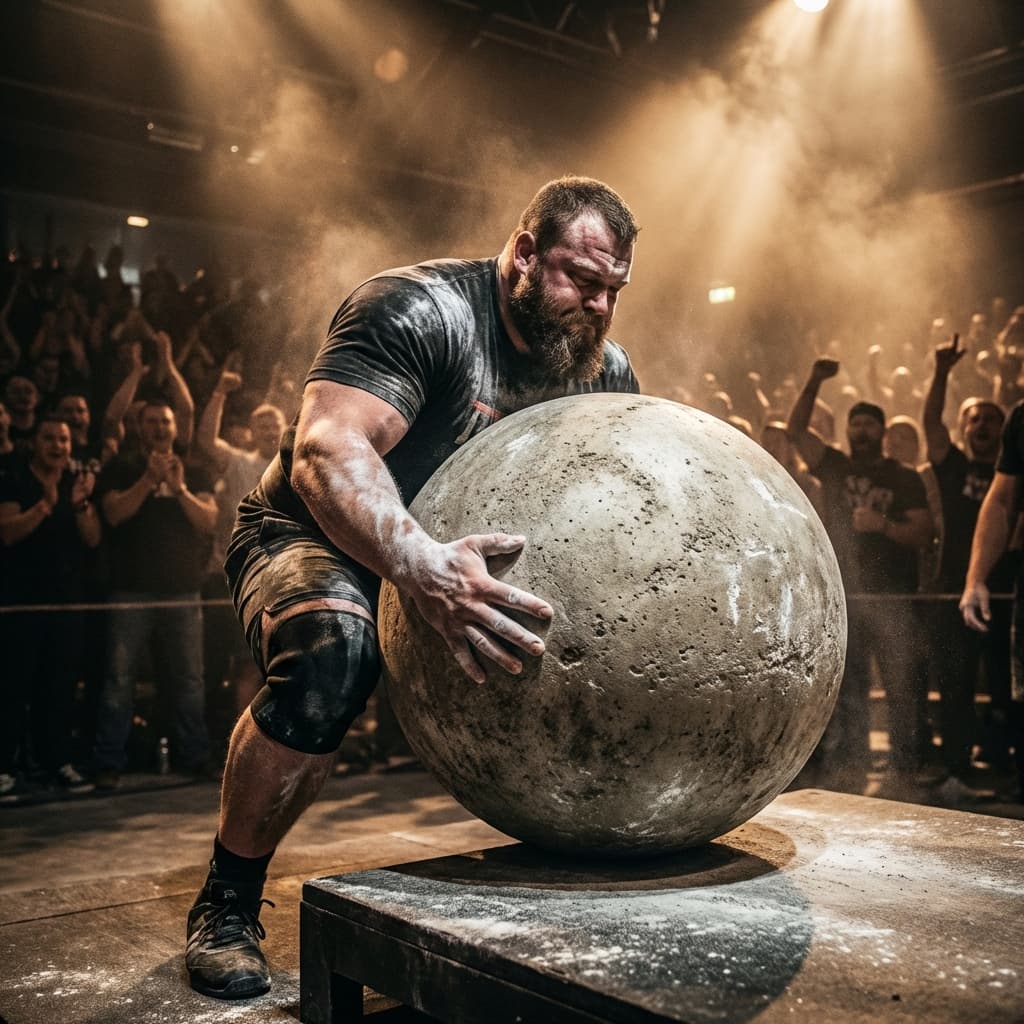
For centuries, "strength" was a subjective term. A 100kg bench press is an elite achievement for a light-weight trainee but may serve as a simple warm-up for a super-heavyweight lifter. To establish true athletic parity, we must move beyond raw totals. This guide details the mathematical framework behind the HobbyTier SBD system and how it defines your standing in a global hierarchy.
1. The Foundation: Squat, Bench, and Deadlift
We utilize the Powerlifting Total—the sum of the highest successful Squat, Bench Press, and Deadlift—as the primary indicator of raw structural strength. These movements collectively test the force production capacity of the entire musculoskeletal system.
- Squat: Evaluates lower body power and spinal stability. Proper depth is required to ensure full posterior chain engagement.
- Bench Press: The primary metric for upper body pushing capacity and pectoral development.
- Deadlift: Tests total body pulling strength and posterior chain endurance. conventional and sumo styles are both recognized as valid mechanical expressions.
2. The Science of Normalization (DOTS Methodology)
Physiological strength does not scale linearly with body mass. This is known as the Square-Cube Law: as an object grows, its mass increases at a faster rate than its structural surface area. Consequently, lighter athletes often demonstrate higher relative strength (strength-to-weight ratio).
Why we use the DOTS Coefficient
The DOTS (Dynamic Objective Team Scoring) formula provides a mathematically balanced way to compare lifters across different weight classes and genders. By applying this coefficient, we can determine the "pound-for-pound" mastery of an athlete regardless of their raw size.
Strength Scaling Comparison (Virtual Example)
This table illustrates how raw strength totals are transformed into a normalized score using standardized coefficients.
| Bodyweight | Raw Total | Normalized Score | Tier Assignment |
|---|---|---|---|
| 60kg | 300kg | 320.5 | Tier 3 |
| 90kg | 420kg | 318.2 | Tier 3 |
| 120kg | 500kg | 315.4 | Tier 3 |
The table shows that despite a 200kg difference in raw total between the 60kg and 120kg lifters, their physiological standing remains within the same tier when normalized. This objective approach ensures that progress is measured by cellular and neural efficiency rather than just absolute body mass.
Numerical values are based on theoretical models and do not represent individual medical or competitive data.
3. The 7-Tier Numerical Hierarchy
We categorize performance levels based on the statistical distribution within verified competitive databases. This allows individuals to track their progression from an introductory level to elite performance.
Tier 1-2: Performance Elite
Top 1% of the population. Characterized by high-level neural adaptation and significant training experience.
Tier 3-4: Advanced Proficiency
Represents the top 5-20% of active participants. Requires consistent structured programming.
Tier 5-7: Foundational Range
General population and early-stage training. Significant progress can be achieved through fundamental consistency.
4. Strategic Progression Framework
Moving through the tiers requires shifting the training focus as the body adapts to higher levels of mechanical stress.
Optimization Phase Guidelines (Virtual Example)
The following phases outline the recommended training focus for individuals looking to ascend the tier hierarchy.
| Training Phase | Primary Physiological Goal | Recommended Protocol |
|---|---|---|
| Accumulation | Muscle Cross-Sectional Area | Moderate weight, high volume (8-12 reps per set). |
| Intensification | Neural Drive & Syncing | Heavy loads, lower volume (3-5 reps per set). |
| Realization | Maximum Force Expression | Near-maximal effort (1-2 reps) with high recovery. |
This structured approach ensures that the body has the necessary structural foundation before attempting maximal force expression. Skipping the accumulation phase often leads to plateaus in the higher tiers, as the "engine" (muscle mass) cannot support the "output" (strength) demanded by advanced tiers.
This framework is a general educational model and is not a personalized medical recommendation.
Safety Precaution: Performance testing should always be conducted in a controlled environment with appropriate safety equipment. Ego-driven lifting significantly increases the risk of orthopedic injury.
5. Common Pitfalls in Strength Assessment
- Inconsistent Technique: Comparing a "half-squat" raw total to a competition-standard total invalidates the tier ranking.
- Weight Class Tunnel Vision: Focusing solely on absolute weight while ignoring the negative impact of excessive body fat on the DOTS score.
- Poor Testing Conditions: Testing maximal strength while in a fatigued state or in a calorie deficit.
- Over-estimation: Using theoretical "one-rep max" calculators rather than verified heavy singles.
- Ignoring Recovery: Expecting linear tier jumps while neglecting the systemic recovery required for neural adaptation.
6. FAQ
Does equipment change my tier?
Yes. Supportive gear like knee wraps or bench shirts significantly alters force expression. HobbyTier standards are based on "Raw" lifting (belts and sleeves only) to maintain cross-population consistency.
Why is my rank lower than I expected?
Most general gym populations are not used to competition-standard depth or paused bench presses. When strict standards are applied, raw numbers often decrease, providing a more accurate (though lower) tier ranking.
*All HobbyTier content is based on general performance data and should not be taken as medical advice.
Always consult with a professional before starting new training protocols.
Document info
- Author: HobbyTier Editorial Team
- Updated: 2026-02-09
- Change summary:
- Updated normalization examples and tier classification system.
- Refined allometric scaling laws for cross-demographic strength comparisons.