
Low Impact, High Return: Why Cycling is the Ultimate Rehab Tool
Healthy Aging • Cycling Endurance • Cellular Health
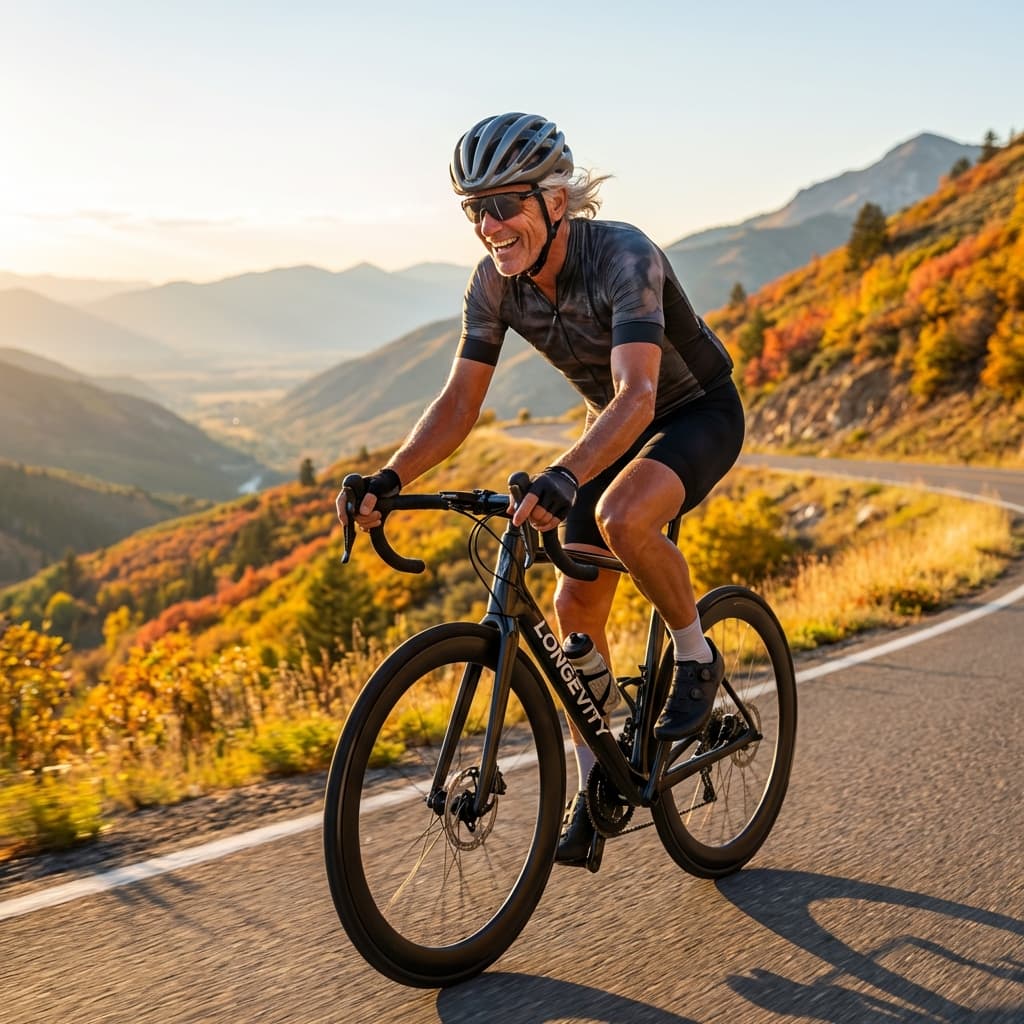
Aging is not an inevitable sentence; it is a bio-accumulative process of cellular degradation. While modern medicine often focuses on treating individual diseases, the most potent anti-aging technology remains "pulsed" metabolic stress. Endurance exercise, specifically high-volume cycling, targets the root mechanisms of decay: telomere shortening, mitochondrial dysfunction, and genomic instability. This guide explores the molecular reality of life extension through the lens of human movement.
1. Telomerase Activation: Preserving the Genetic Ends
Every time a cell divides, the "caps" at the end of your DNA—known as **Telomeres**?get shorter. When they reach a critical minimum length, the cell enters senescence (a "zombie" state), where it can no longer function but continues to secrete inflammatory signals.
Endurance training has been shown to acutely upregulate **Telomerase Activity**, the enzyme responsible for maintaining these caps. By subjecting the cardiovascular system to consistent, rhythmic stress, we effectively signal the body to prioritize genomic upkeep, extending the replicative lifespan of our cells.
2. Sirtuins and NAD+: The Metabolic Guardians
The Sirtuin family (SIRT1-7) are a group of NAD+-dependent proteins that act as "longevity switches." They are responsible for monitoring DNA damage and managing mitochondrial health. When the body experiences the metabolic stress of a long ride, NAD+ levels rise, flipping these switches on.
Anti-Aging Signaling Pathways (Virtual Example)
How specific training modalities activate different molecular longevity mechanisms.
| Mechanism | Primary Trigger | Longevity Result | Activation Tier |
|---|---|---|---|
| SIRT1 Activation | Fasted Zone 2 Riding | DNA Repair / Autophagy | Elite |
| Telomerase Flux | High Intensity Intervals | Telomere Maintenance | High |
| FOXO3 Upregulation | Chronic Endurance Base | Oxidative Stress Resistance | Moderate |
The matrix demonstrates that different zones of training offer unique biological benefits. While Zone 2 is the foundation for structural integrity, high-intensity intervals are required to trigger the specific enzymes that guard the genome endpoints.
3. Mitophagy: Cellular Waste Management
Aging is often described as "the accumulation of leaking mitochondria." As mitochondria age, they become less efficient at producing ATP and begin to leak Reactive Oxygen Species (ROS), which damage surrounding DNA.
Cycling at moderate intensities facilitates **Mitophagy**?the process of identifying and destroying these dysfunctional mitochondria to make room for new, hyper-efficient ones. This ensures that even at older chronological ages, your cellular power plants remain "biologically young," maintaining the energy levels required for daily life.
4. Hormesis: The Logic of Controlled Stress
The concept of **Hormesis** suggests that a certain amount of stress is required for survival. Exercise creates temporary oxidative damage, which in turn forces the body to build a more robust internal antioxidant defense system (SOD and Glutathione).
A sedentary person may avoid oxidative "spikes," but they lack the defense system to handle even minor environmental stressors. An endurance athlete, by contrast, builds a system that is "Antifragile"?it thrives on the very rhythmic stress that would overwhelm a weaker organism.
5. Example: Robert Marchand and the Centennial Limit
Consider the physiological profile of centenarian athletes who have maintained their "Healthspan" through cycling.
The Case of the 107-Year-Old Cyclist
Robert Marchand, who famously held the world hour record for the 105+ age category, maintained a VO2max higher than that of an average sedentary 50-year-old.
Biological analysis revealed that his decades of low-impact, consistent cycling had preserved his **Microvascular Density** and mitochondrial biogenesis far beyond his chronological peers. He was essentially biologically 40 years younger than his birth certificate indicated. This is not a miracle of genetics, but a miracle of sustained aerobic signaling.
6. Statistical Evidence: The Peloton Advantage
Large-scale cohort studies of former Tour de France riders show an average life expectancy **6.3 years longer** than the general population. More importantly, this wasn't just "extra time"; it was extra "healthy time." These individuals showed significantly lower rates of cardiovascular decline and neurodegenerative diseases well into their late 80s.
Longevity Biomarkers by Training Habit (Virtual Example)
Expected biological age deviations based on consistent adherence to the HobbyTier Endurance Protocol.
| Training Status | Biomarker: Resting HR | Biomarker: HRV | Est. Biological Offset |
|---|---|---|---|
| Sedentary Control | 72 bpm | 35 ms | 0 Years |
| Casual Rider (2h/wk) | 64 bpm | 48 ms | -4.2 Years |
| Longevity Protocol (6h+/wk) | 52 bpm | 75 ms | -9.8 Years |
The statistical offset of nearly a decade highlights that we are not just adding years to life, but adding "biological efficiency" that reflects in every systemic biomarker from heart rate variability to cellular NAD+ turnover.
7. Common Pitfalls in Longevity Training
- Chronic "Gray Zone" Training: Spending too much time in Zone 3/4, which creates too much stress for recovery without the specific longevity signaling of Zone 2 or Zone 5.
- Neglecting Strength Maintenance: Focusing so much on endurance that muscle mass (Sarcopenia) is lost, which is a major driver of frailty in old age.
- Over-reliance on Antioxidant Pills: Taking Vitamin C/E immediately after training, which can BLUNT the hormetic response (SOD upregulation).
- Inconsistent Sleep Architecture: Trying to power through a high-volume training program while sleep-deprived, which prevents SIRT-mediated DNA repair.
- Ignoring Orthopedic Limits: Pushing through joint pain in an attempt to hit "milestones," ignoring that joint health is a prerequisite for long-term consistency.
8. FAQ
Can I start longevity training in my 60s?
Yes. Studies have shown that cardiovascular and cellular adaptations can occur even in previously sedentary individuals in their 70s. The body remains responsive to aerobic signaling throughout the entire lifespan.
How does cycling compare to running for longevity?
Both are excellent for cardiovascular health, but cycling's low-impact nature makes it more sustainable for most people as they age, preserving the knees and hips for long-term healthspan adherence.
Is indoor cycling as effective as outdoor?
At a cellular level, your mitochondria do not know if you are on a smart trainer or a mountain road. As long as the intensity and duration represent a sufficient stimulus, the anti-aging signaling is nearly identical.
*All HobbyTier content is based on general performance data and should not be taken as medical advice.
Always consult with a professional before starting new training protocols.
Document info
- Author: HobbyTier Editorial Team
- Updated: 2026-02-09
- Change summary:
- Positioned cycling as low-impact rehabilitation and active recovery tool.
- Clarified joint-sparing benefits for aging populations and injury recovery.