
The Physics of Cycling: Optimal Posture and Cadence
Cycling Aerodynamics • Cadence • Bike Fit
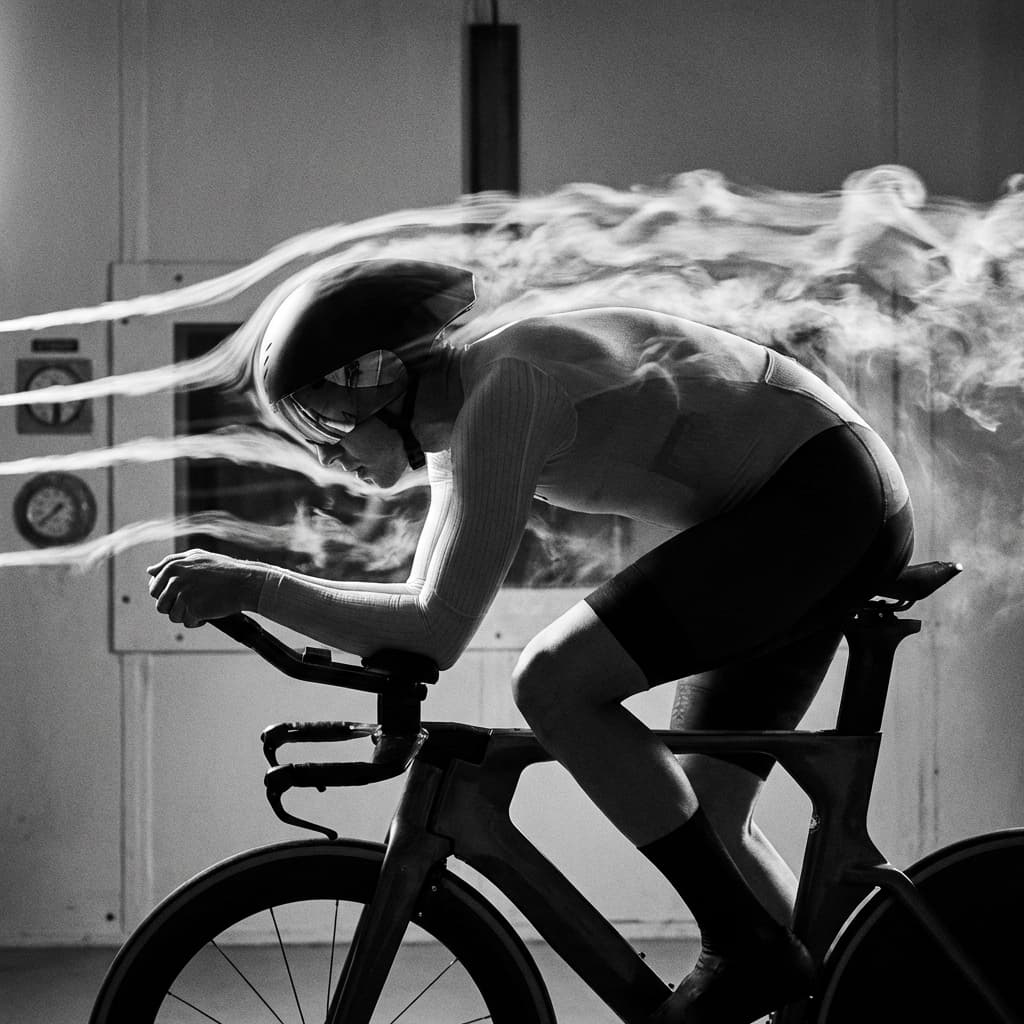
In cycling, strength is merely the baseline. Once a rider exceeds 30 km/h, performance shifts from a test of pure physiology (VO₂max) to an engineering challenge defined by fluid dynamics. This article analyzes the physics of **Aerodynamic Drag (CdA)**, the mechanical trade-offs of aggressive posture, and the mathematical reality of energy conservation on two wheels.
1. CdA: The Coefficient of Competitive Advantage
The most critical metric for any high-performance cyclist is not their weight, but their **CdA**?the Coefficient of Drag (Cd) multiplied by their Frontal Area (A). This single number determines how much power is required to displace the air in front of the bike.
P(total) = P(air) + P(rolling) + P(gravity)
P(air) = 0.5 · ρ · v² • CdA
// Where • is air density, v is velocity. Notice that velocity is CUBED.
Because drag increases with the cube of velocity, doubling your speed requires eight times the power output. This is why aerodynamic optimization becomes exponentially more important as you get faster.
2. Decoding the Scaling Laws of Wind Resistance
To understand how to "cheat" the wind, we must look at the variables we can control. While we cannot change gravity or air density (without traveling), we have total control over our CdA through body positioning and equipment selection.
Power Demand vs. Velocity Scaling (Virtual Example)
Analyzing the energy cost of incremental speed gains across different aerodynamic profiles.
| Speed | Power (Upright) | Power (Aero Hoods) | Energy Savings |
|---|---|---|---|
| 30 km/h | 165 Watts | 135 Watts | ~18% |
| 40 km/h | 390 Watts | 315 Watts | ~19% |
| 50 km/h | 760 Watts | 610 Watts | ~20% |
The table reveals that as speed increases, the relative and absolute benefit of an aerodynamic position grows. At 50 km/h, an optimized position saves 150 Watts compared to an upright posture—this is the difference between a moderate effort and a world-class sprint.
3. Pedaling Mechanics: Torque vs. Cadence
Efficiency is not just about the wind; it is about how the body converts oxygen into torque at the crank. This brings us to the **Metabolic Cost of Cadence**.
Lower cadences (60-70 RPM) rely heavily on muscular force and recruitment of fast-twitch fibers, which fatigue rapidly. Higher cadences (90+ RPM) shift the load to the cardiovascular system. While higher cadences have a higher "internal metabolic cost" (just moving the legs quickly uses energy), they preserve the muscles for late-stage efforts in a race.
4. Optimization: From Hoods to Drops
The most common misconception in cycling is that "riding in the drops" is always the fastest. Wind tunnel testing shows that **"Aero Hoods"** (riding on the hoods with forearms horizontal) is often more aerodynamic than riding in the drops because it presents a narrower frontal profile.
- Tucked Elbows: Keeping elbows in line with the knees reduces the lateral "spilling" of air.
- Narrow Bars: Reducing handlebar width from 44cm to 38cm is one of the cheapest ways to reduce frontal area (A).
- Shrugged Shoulders: "Tucking" the head between the shoulders reduces the turbulence created by the neck.
5. Example: Engineering the World Hour Record
Consider the extreme engineering required for the UCI Hour Record, where riders cover over 55km in a single hour.
The Aero-Power Trade-off
Elite track cyclists like Filippo Ganna utilize a CdA of approximately 0.19. This position is so aggressive that the hip angle is nearly closed at the top of the pedal stroke.
A "standard" rider who attempts this position may find their power output drops by 15-20% because their lungs are compressed and their glutes are over-stretched. Optimization for the Hour Record is a months-long process of slowly lowering the handlebars while maintaining the ability to produce 400+ Watts.
6. Biomechanical Trade-offs: The Hip Angle Limit
Every aerodynamic gain has a physiological cost. As the torso gets lower, the **Hip Angle** closes.
Postural Efficiency Benchmarks (Virtual Example)
Guidelines for balancing aerodynamic gains against physiological sustainability.
| Position Type | Avg. Duration Limit | Power Loss Risk | Ideal Use Case |
|---|---|---|---|
| Endurance (Upright) | 4+ Hours | Low (0%) | Climbing / Group Ride |
| Aero Hoods | 30 - 60 Min | Moderate (2-5%) | Breakaways / Flats |
| Time Trial (Tuck) | < 30 Min | High (5-10%) | Solo Effort / PR Attempt |
Optimal speed is found at the intersection of these variables. A position that is 10% more aerodynamic but causes a 15% drop in power will result in a **slower** overall speed. Fitness must be tested in the specific position intended for use.
7. Common Pitfalls in Aero Positioning
- "Slamming" the Stem Too Soon: Lowering the handlebars before the core and hamstrings are flexible enough to support the weight, leading to back pain and power loss.
- Flapping Jerseys: Expending thousands of dollars on deep-section wheels while wearing a loose-fitting jersey, which creates more drag than the wheels save.
- Looking Down: Staring at the front wheel to stay aerodynamic, which creates a huge "air scoop" at the back of the helmet and is safety-compromised.
- Static Fitting: Assuming a bike fit performed while stationary on a trainer translates to a dynamic, high-torque environment on the road.
- Neglecting Cadence Flexibility: Only training at one specific RPM, making you fragile when wind or terrain changes require a shift in torque delivery.
8. FAQ
Does shaving your legs actually make you faster?
Yes. Specialized Wind Tunnel tests showed that shaved legs can save approximately 50-80 seconds over a 40km Time Trial—this is a more significant gain than many high-end wheelsets.
What is the most cost-effective aerodynamic upgrade?
A well-fitted, tight skinsuit or aero jersey is the most "Watts-per-Dollar" upgrade you can make, followed by an aerodynamic helmet and narrower handlebars.
Is a higher cadence always better for efficiency?
Not necessarily. While 90+ RPM is standard for pros, "Optimal Cadence" is individual and depends on your muscle fiber composition and cardiovascular limit. The goal is to avoid muscular burnout.
*All HobbyTier content is based on general performance data and should not be taken as medical advice.
Always consult with a professional before starting new training protocols.
Document info
- Author: HobbyTier Editorial Team
- Updated: 2026-02-09
- Change summary:
- Detailed aerodynamics of body position and cadence efficiency.
- Analyzed watt savings through optimal posture and pedaling technique.